Primary threat research from Elastic Security Labs Threat Command
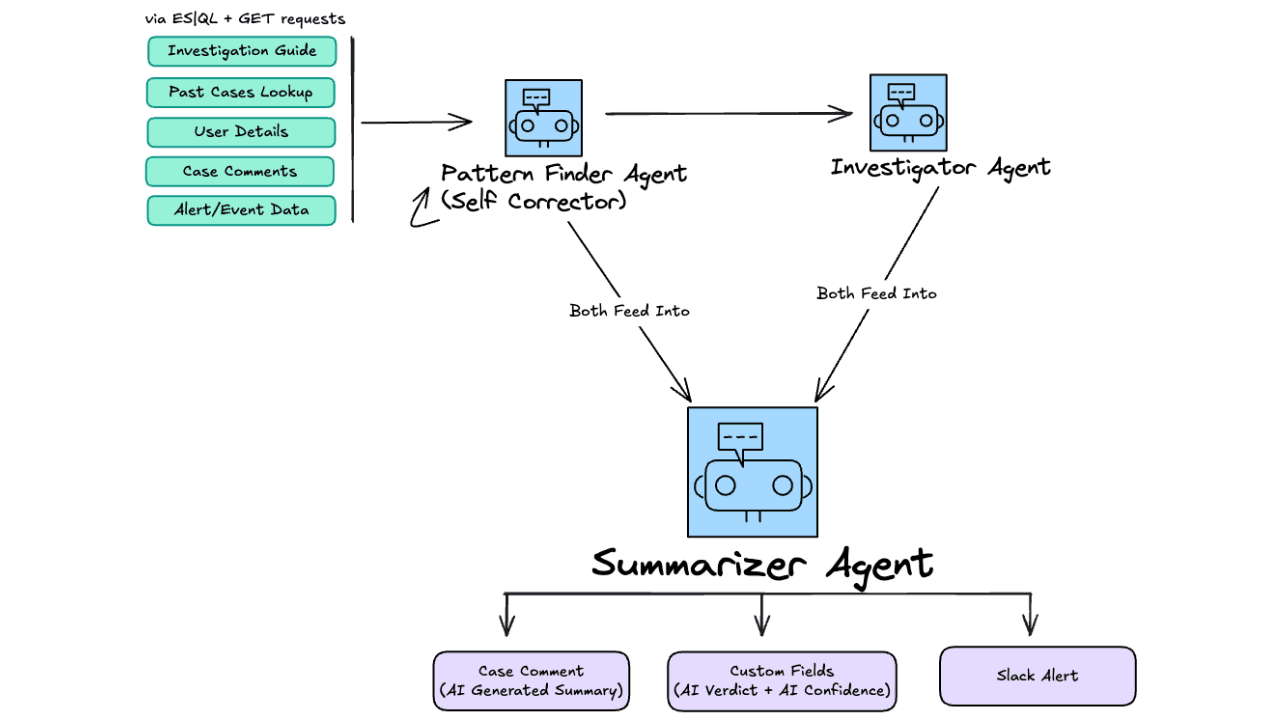
Elastic's InfoSec team runs three agents that read the detection rule's investigation guide and the closure reasons on 30 days of past cases. Analysts now clear most alerts with a single click in Slack.
Featured


Detection Engineering
View all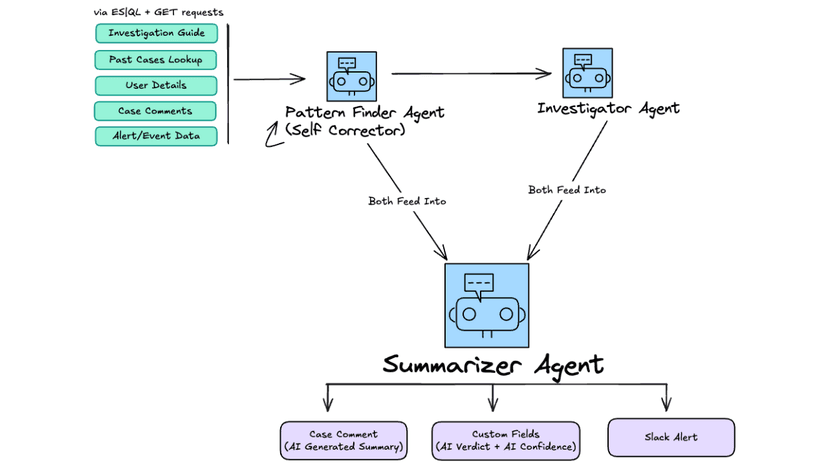
Inside Elastic's agentic SOC: How we took AI alert triage from 60% to 92% accuracy
Elastic's InfoSec team runs three agents that read the detection rule's investigation guide and the closure reasons on 30 days of past cases. Analysts now clear most alerts with a single click in Slack.

The security signal log tailing can't see: tracking npm cooldown removals with Elastic Agent
A 40-line CEL integration snapshots .npmrc files every 6 hours to catch cooldown removals. This post walks through the three ways we broke filestream before landing on snapshot semantics.

Elastic goes all-in on Hacker Summer Camp at Black Hat and DEF CON in Las Vegas
Attack Discovery turns raw alerts into validated threats and Elastic Defend closes vulnerable driver gaps as fast as they're disclosed. Watch it all run against real attacks at the booth.

Exploring the Hugging Face Breach: mapping AI agent tactics to Elastic Defend
Every stage of the Hugging Face breach maps to Elastic Defend and SIEM rules already shipping, from worker RCE and credential harvest to self-migrating C2 and GenAI detection.
Malware Analysis
View all
Shai-Hulud strikes again: CHAINDROP worm hits 400+ npm packages
Elastic Security Labs identified the return of Shai-Hulud. Attackers compromised the keyv maintainer and deployed CHAINDROP, a worm that uses stolen npm credentials to backdoor co-owned packages totaling over 1.3 billion monthly downloads.

New North Korean campaign uses fake coding interviews to steal developer credentials
DPRK-aligned hackers hid malware inside SVG flag images to backdoor developer job interview coding tests. Not one antivirus vendor caught it.

TELEPUZ: a modular MaaS malware spreading via CLICKFIX-VIDAR chains
TELEPUZ is a modular malware that emerged through CLICKFIX-VIDAR attacks in April. We reverse-engineered it to show you the infrastructure and evasion techniques that matter.

ClickFix to Cash-Out: Anatomy of a Mexican Banking-Fraud Toolkit
Elastic Security Labs tracks REF6045, an active operator-assisted banking fraud operation targeting customers of Mexican banks, fintech, payment processors, and cryptocurrency exchanges.
Internals
View all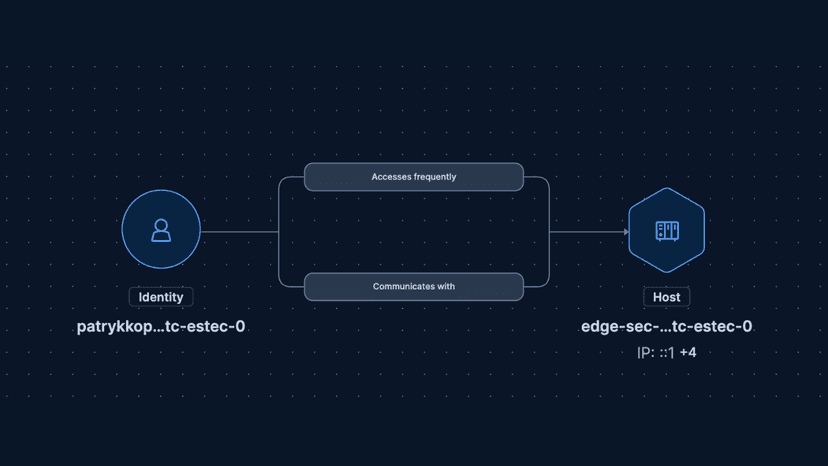
How a team of entity maintainers monitors, connects and scores entities in Elastic Security
Inside Elastic Security, background jobs called maintainers each own one piece of every user, host and service record, from building entities out of raw logs to resolving identities and scoring risk.
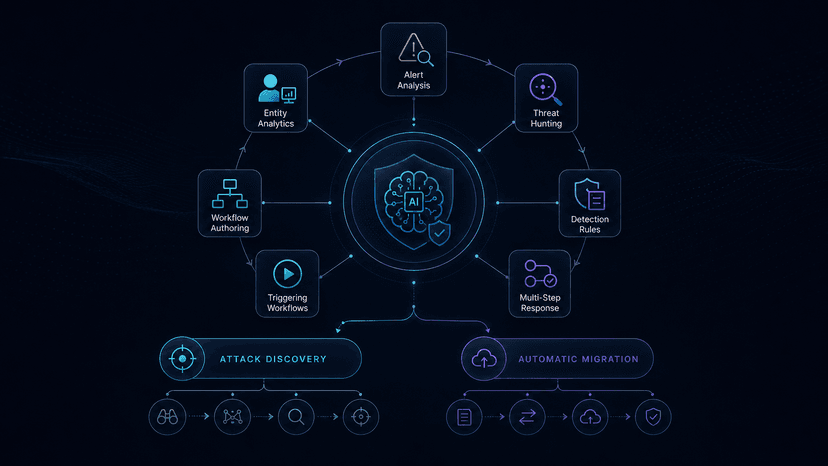
Benchmarking the Agentic SOC: How we evaluate LLMs for security workflows
Public leaderboards can't tell you which LLM to trust in your SOC, so Elastic built an evaluation framework that grades models on the work (tool calls, execution traces, blind judging) across Agent Builder, Attack Discovery, and automatic migration.

Agents vs. agents: how we triage HackerOne reports for $2 each, 85% as well as a human
LLMs made it cheap to flood bug bounty programs with submissions. Here's how Elastic built an AI triage agent that matches human decisions 85% of the time, including the architecture, threat model and calibration against 3,300 real reports

Inside Elastic InfoSec's agentic SOC: How we cut AI agent LLM calls by 60%
We run fourteen AI agents that triage Elastic InfoSec alerts. They were taking 19 LLM calls to do work that needed 8. Here's the five-step optimization loop we run across the fleet, plus the prompt template you can use with any AI assistant.
Threat Intelligence
View allShai-Hulud strikes again: CHAINDROP worm hits 400+ npm packages
Elastic Security Labs identified the return of Shai-Hulud. Attackers compromised the keyv maintainer and deployed CHAINDROP, a worm that uses stolen npm credentials to backdoor co-owned packages totaling over 1.3 billion monthly downloads.

wp2shell hits WordPress: detecting pre-auth RCE from plugin drop to command execution
We ran the wp2shell WordPress RCE chain end-to-end with Elastic Defend. Detection rule walkthrough, IOCs, and hunt guidance.
New North Korean campaign uses fake coding interviews to steal developer credentials
DPRK-aligned hackers hid malware inside SVG flag images to backdoor developer job interview coding tests. Not one antivirus vendor caught it.
ClickFix to Cash-Out: Anatomy of a Mexican Banking-Fraud Toolkit
Elastic Security Labs tracks REF6045, an active operator-assisted banking fraud operation targeting customers of Mexican banks, fintech, payment processors, and cryptocurrency exchanges.
Machine Learning
View all
Detect domain generation algorithm (DGA) activity with new Kibana integration
We have added a DGA detection package to the Integrations app in Kibana. In a single click, you can install and start using the DGA model and associated assets, including ingest pipeline configurations, anomaly detection jobs, and detection rules.

Automating the Security Protections rapid response to malware
See how we’ve been improving the processes that allow us to make updates quickly in response to new information and propagate those protections to our users, with the help of machine learning models.

Detecting Living-off-the-land attacks with new Elastic Integration
We added a Living off the land (LotL) detection package to the Integrations app in Kibana. In a single click, you can install and start using the ProblemChild model and associated assets including anomaly detection configurations and detection rules.

Identifying beaconing malware using Elastic
In this blog, we walk users through identifying beaconing malware in their environment using our beaconing identification framework.
GenerativeAI
View allInside Elastic's agentic SOC: How we took AI alert triage from 60% to 92% accuracy
Elastic's InfoSec team runs three agents that read the detection rule's investigation guide and the closure reasons on 30 days of past cases. Analysts now clear most alerts with a single click in Slack.

13 million tool calls: auditing every AI coding agent action with Elastic Agent
Cursor hooks and Elastic Agent capture every tool call, shell command, file read and MCP request as structured events you can hunt with ES|QL.
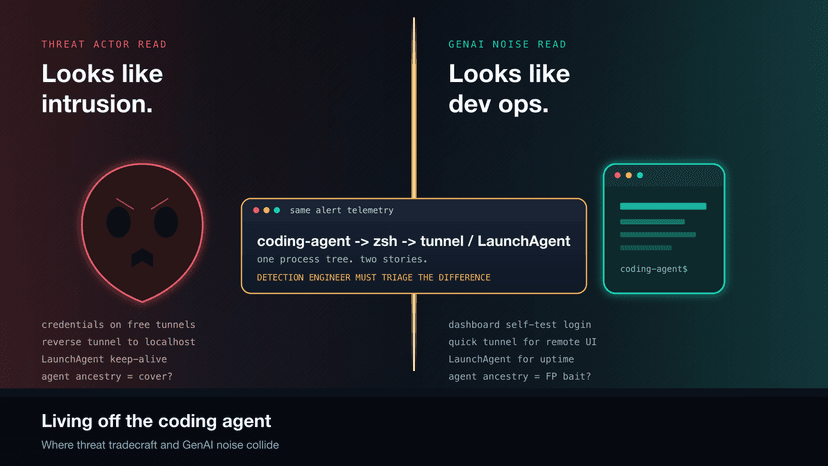
Living off the coding agent: Two tales of tunnels and LaunchAgents
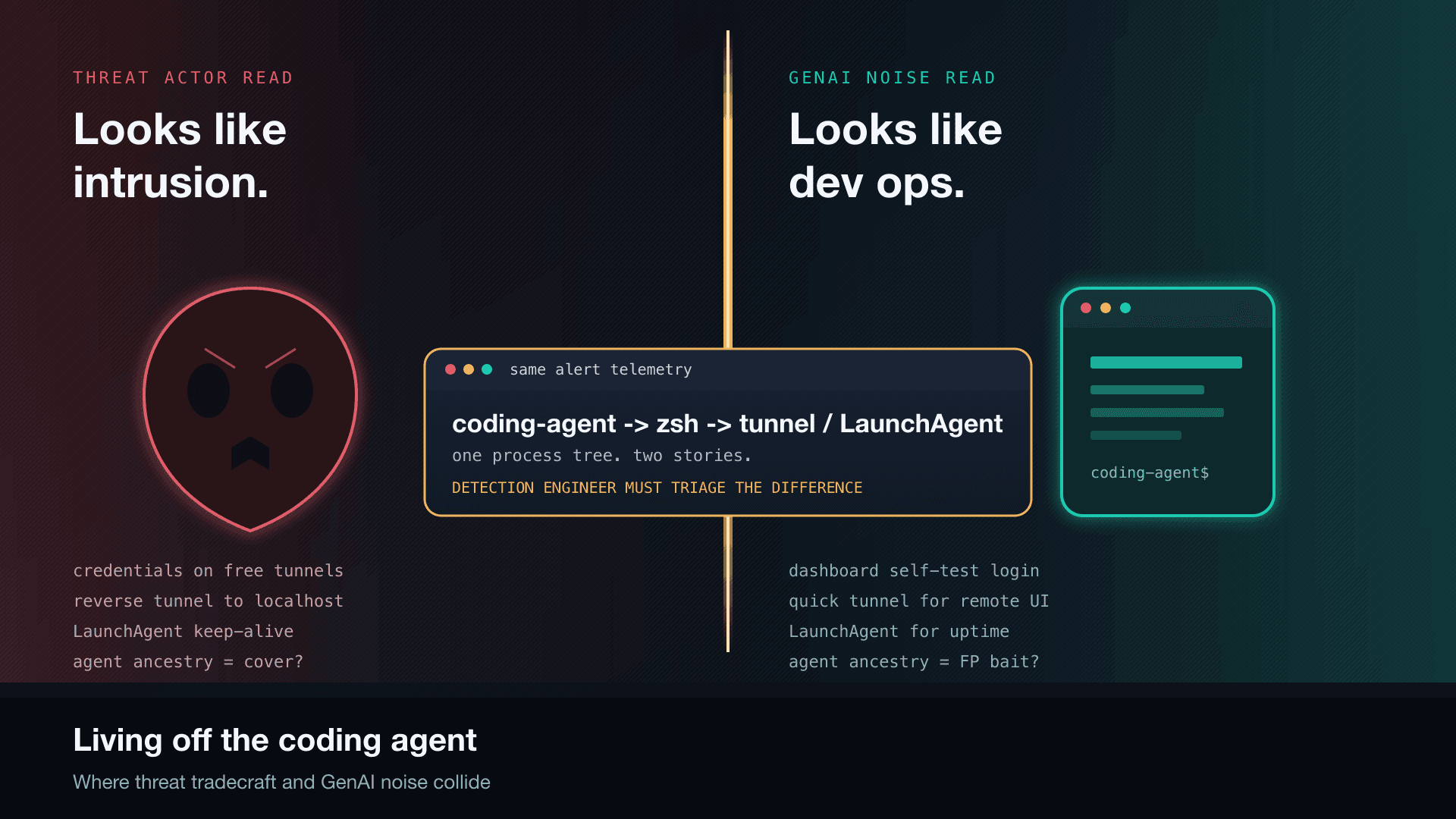
Agent-parented reverse tunnels and LaunchAgents can expose a local admin app to the internet. Endpoint still needs to treat that as high severity even when the activity looks like vibe-coded ops, not confirmed malware.
Benchmarking the Agentic SOC: How we evaluate LLMs for security workflows
Public leaderboards can't tell you which LLM to trust in your SOC, so Elastic built an evaluation framework that grades models on the work (tool calls, execution traces, blind judging) across Agent Builder, Attack Discovery, and automatic migration.
Tools
View all13 million tool calls: auditing every AI coding agent action with Elastic Agent
Cursor hooks and Elastic Agent capture every tool call, shell command, file read and MCP request as structured events you can hunt with ES|QL.
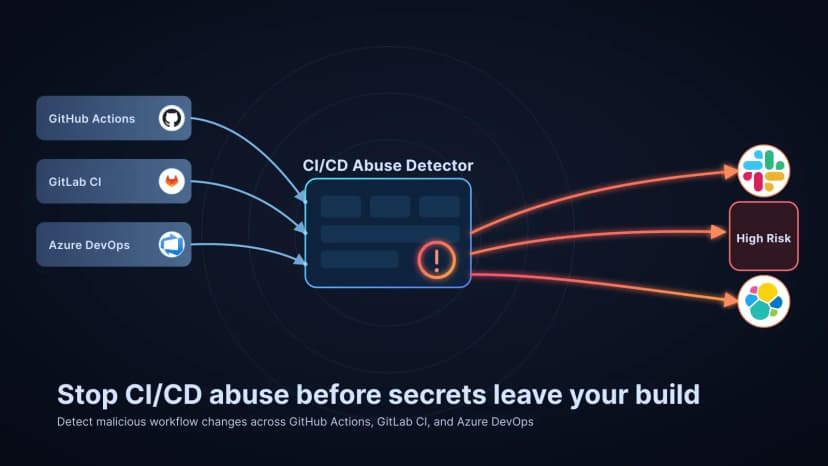
CI/CD pipeline abuse: the problem no one is watching
How we built an open-source, drop-in CI template that uses signal extraction and LLM reasoning to catch CI/CD abuse in GitHub Actions, GitLab CI, and Azure DevOps pipelines.

WinVisor – A hypervisor-based emulator for Windows x64 user-mode executables
WinVisor is a hypervisor-based emulator for Windows x64 user-mode executables that leverages the Windows Hypervisor Platform API to provide a virtualized environment for logging syscalls and enabling memory introspection.

STIXy Situations: ECSaping your threat data
Structured threat data is commonly formatted using STIX. To help get this data into Elasticsearch, we’re releasing a Python script that converts STIX to an ECS format to be ingested into your stack.